Industry:
Fintech
Client:
ANZ Plus Bank
Year:
2024

Document
Automation
{ AI integration }
Reducing manual processing and friction by automating document submission.
Process Automation
AI Product Strategy
UX Design
Cross-functional collaboration
Artificial Intelligence Integration

overview.
overview.
{ context }
Both data and service team needed to streamline the home loan application process, reduce manual handling for customers and internal teams. Our goal was to improve speed and accuracy, while decrease manual handling.
Both data and service team needed to streamline the home loan application process, reduce manual handling for customers and internal teams. Our goal was to improve speed and accuracy, while decrease manual handling.
what this project was about.
what.
{ strategic intent }
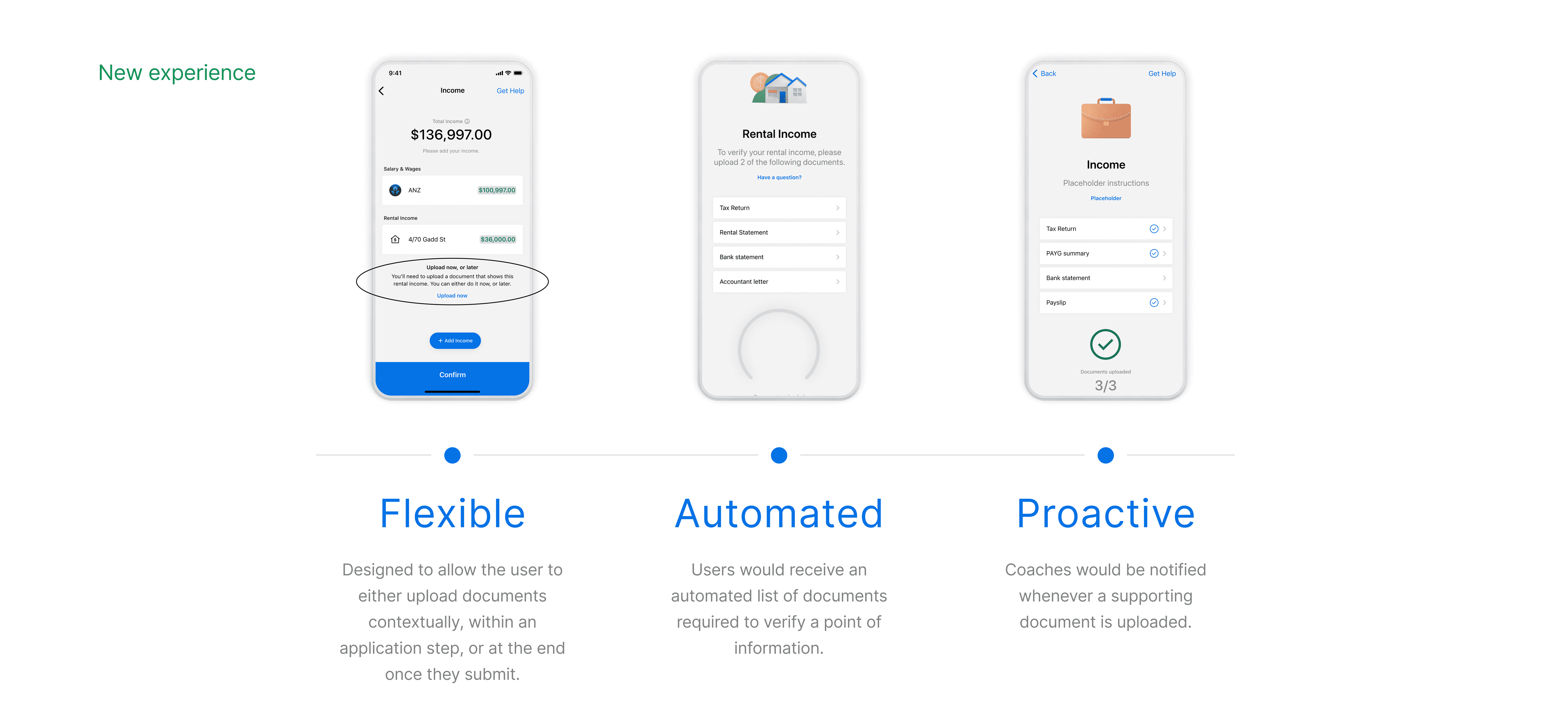
This initiative automated a previously manual document upload flow within the ANZ Plus app. By integrating system logic and dynamic prompts, customers could now securely upload only the required documents—simplifying the experience, improving compliance, and reducing processing time for the lending team.
This initiative automated a previously manual document upload flow within the ANZ Plus app. By integrating system logic and dynamic prompts, customers could now securely upload only the required documents—simplifying the experience, improving compliance, and reducing processing time for the lending team.
where we started.
where we started.
{ constraints }
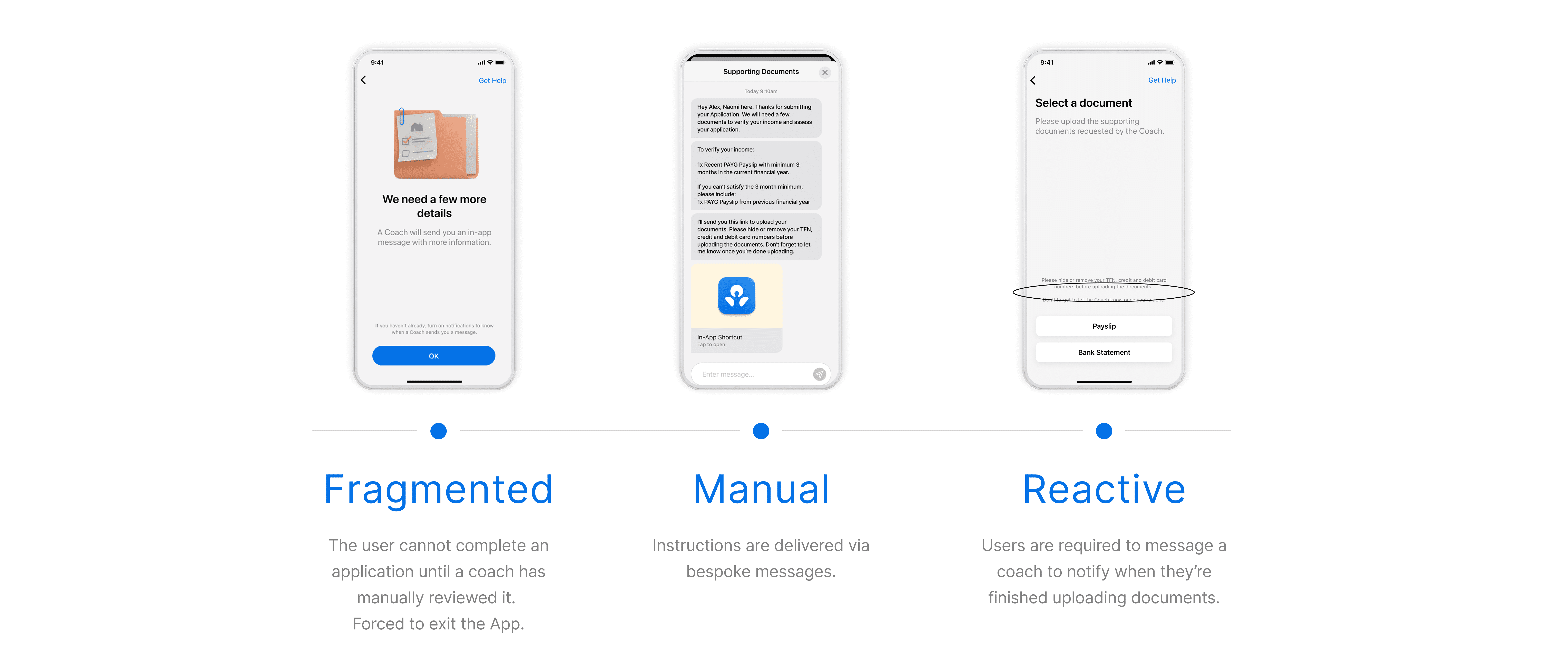
Customers uploaded incorrect or incomplete documents, causing processing delays.
Customers uploaded incorrect or incomplete documents, causing processing delays.
The internal verification team spent excessive time reviewing and classifying uploads.
The internal verification team spent excessive time reviewing and classifying uploads.
No automated logic existed to guide users through what was required based on loan type.
No automated logic existed to guide users through what was required based on loan type.
The existing app design pattern didn’t support document-type recognition or progressive validation.
The existing app design pattern didn’t support document-type recognition or progressive validation.
what we discovered.
what we discovered.
{ opportunities }
The existing app design pattern didn’t support document-type recognition or progressive validation.
The existing app design pattern didn’t support document-type recognition or progressive validation.
Intelligent validation could prevent common upload errors automatically.
Intelligent validation could prevent common upload errors automatically.
Dynamic UI states simplified user choices and improved task completion.
Dynamic UI states simplified user choices and improved task completion.
A single, reusable pattern for document collection could scale across products.
A single, reusable pattern for document collection could scale across products.

how we designed.
{ process }
Discover
Analysed existing customer feedback and service data to understand upload failure points and classify error types.
Define
Created logic maps to connect document requirements to loan types, clarifying where automation could replace manual checks.
Ideate
Partnered with engineers and legal teams to map secure file-handling flows, ensuring regulatory compliance and accessibility.
Test
Designed interactive Figma prototypes with auto-validation logic and dynamic field states, tested with customers and internal users.
Deliver
Finalised a reusable upload pattern, integrated into the design system for broader use across lending features.
how.
{ process }
Discover
Analysed existing customer feedback and service data to understand upload failure points and classify error types.
Define
Created logic maps to connect document requirements to loan types, clarifying where automation could replace manual checks.
Ideate
Partnered with engineers and legal teams to map secure file-handling flows, ensuring regulatory compliance and accessibility.
Test
Designed interactive Figma prototypes with auto-validation logic and dynamic field states, tested with customers and internal users.
Deliver
Finalised a reusable upload pattern, integrated into the design system for broader use across lending features.
what we built.
what we built.
{ solution }
An automated in-app upload flow that recognised document type, verified completeness, and surfaced real-time feedback.
Intelligent prompts guided users through required uploads.
Dynamic UI validated documents before submission.
Reusable design component adopted across other lending journeys.
An automated in-app upload flow that recognised document type, verified completeness, and surfaced real-time feedback.
Intelligent prompts guided users through required uploads.
Dynamic UI validated documents before submission.
Reusable design component adopted across other lending journeys.
impact.
30%+ reduction in document-related support tickets.
25% faster processing times for verification.
Significant reduction in customer friction during onboarding.
30%+ reduction in document-related support tickets.
25% faster processing times for verification.
Significant reduction in customer friction during onboarding.
"It was straightforward — I knew exactly what to upload, and I didn’t have to redo anything."
what we learned.
what we learned.
{ reflection }
Automation is most effective when it feels invisible. By designing for both user intuition and operational accuracy, we reduced errors while building scalable, future-ready workflow patterns.
Automation is most effective when it feels invisible. By designing for both user intuition and operational accuracy, we reduced errors while building scalable, future-ready workflow patterns.
how we applied it.
how we applied it.
{ application of insights }
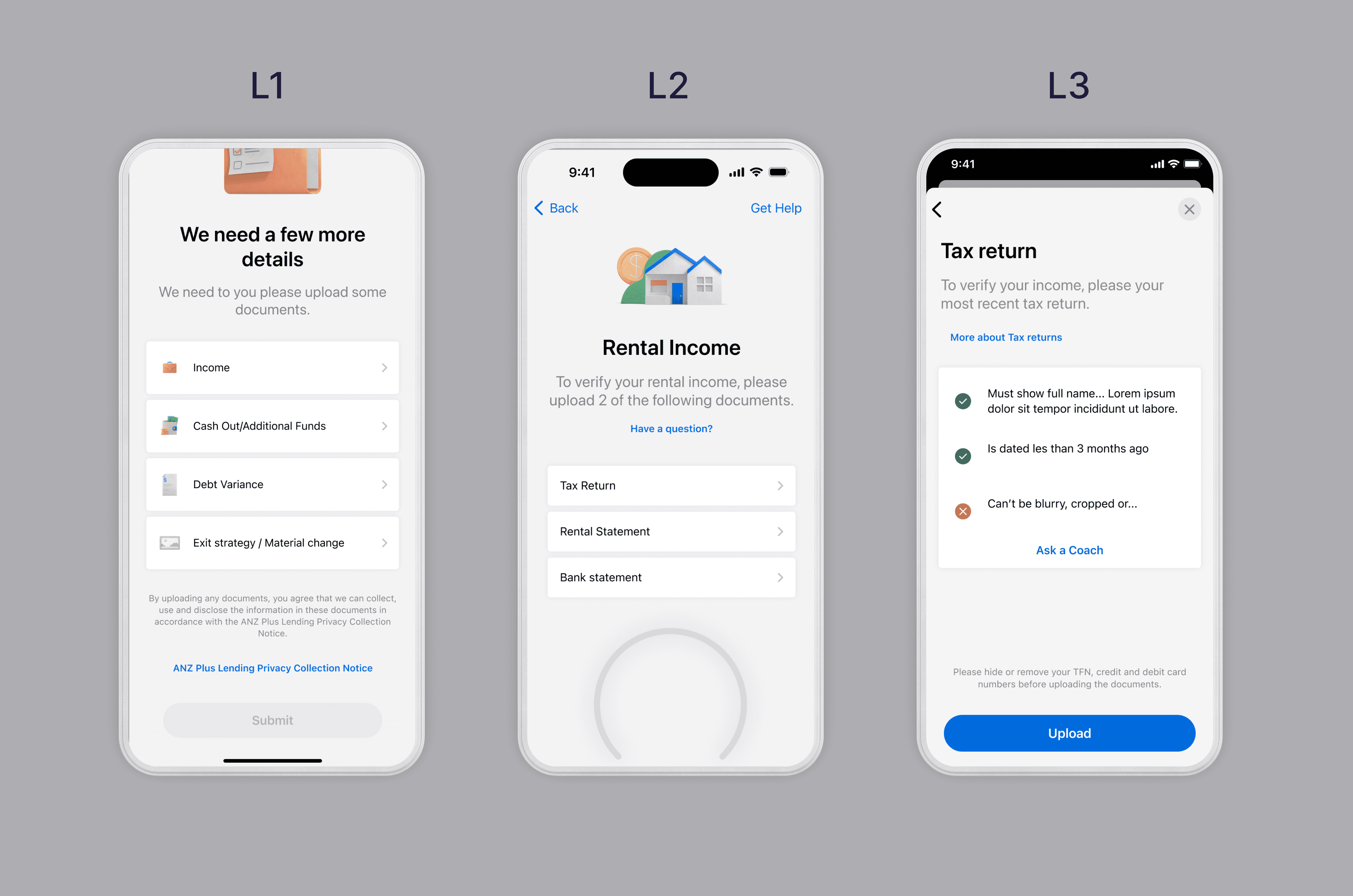
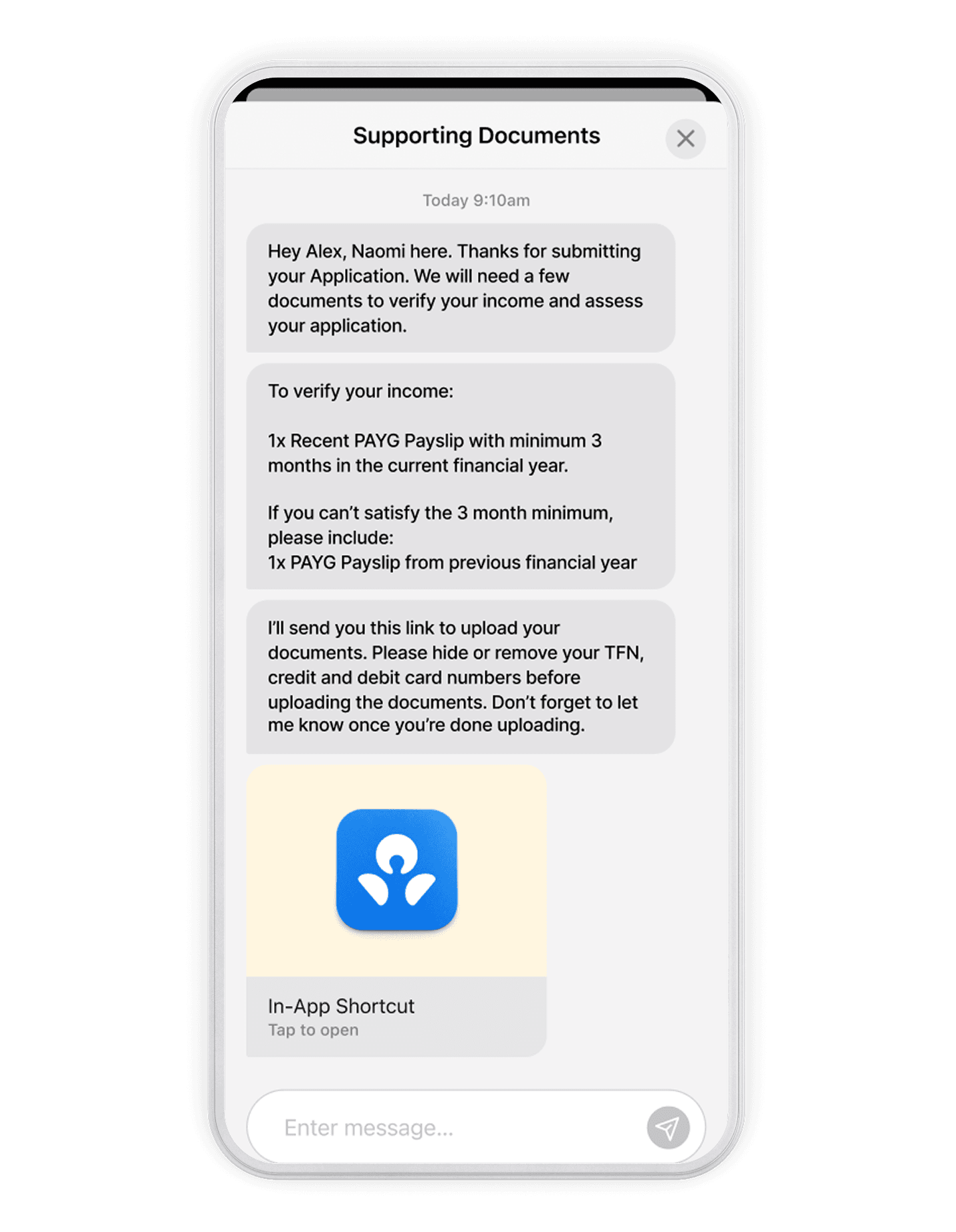
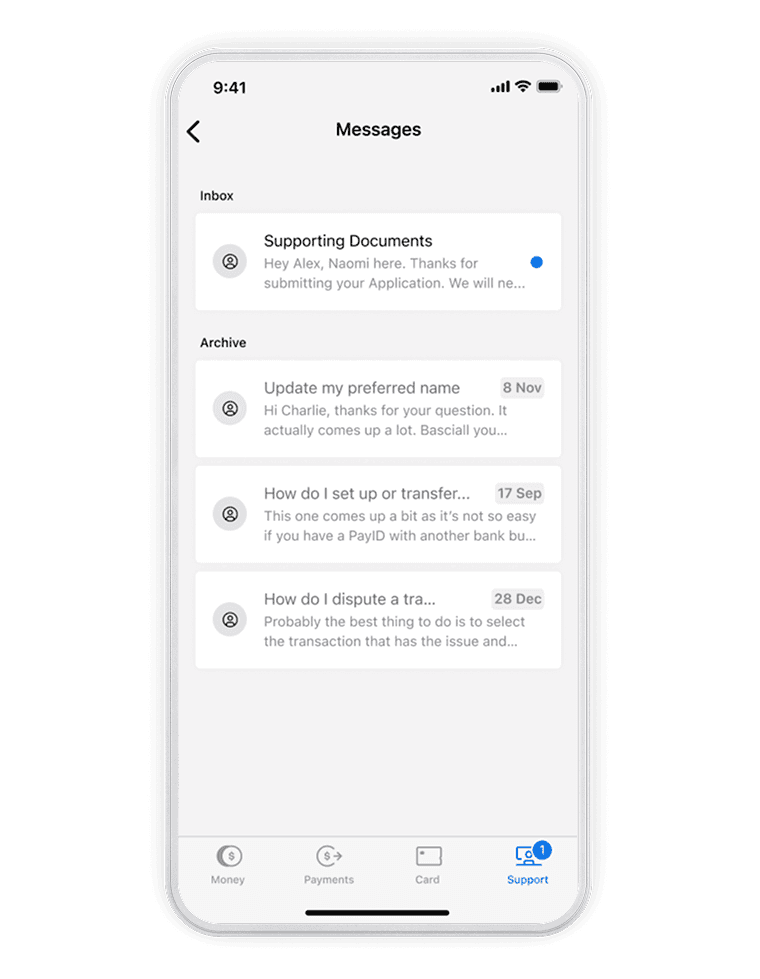
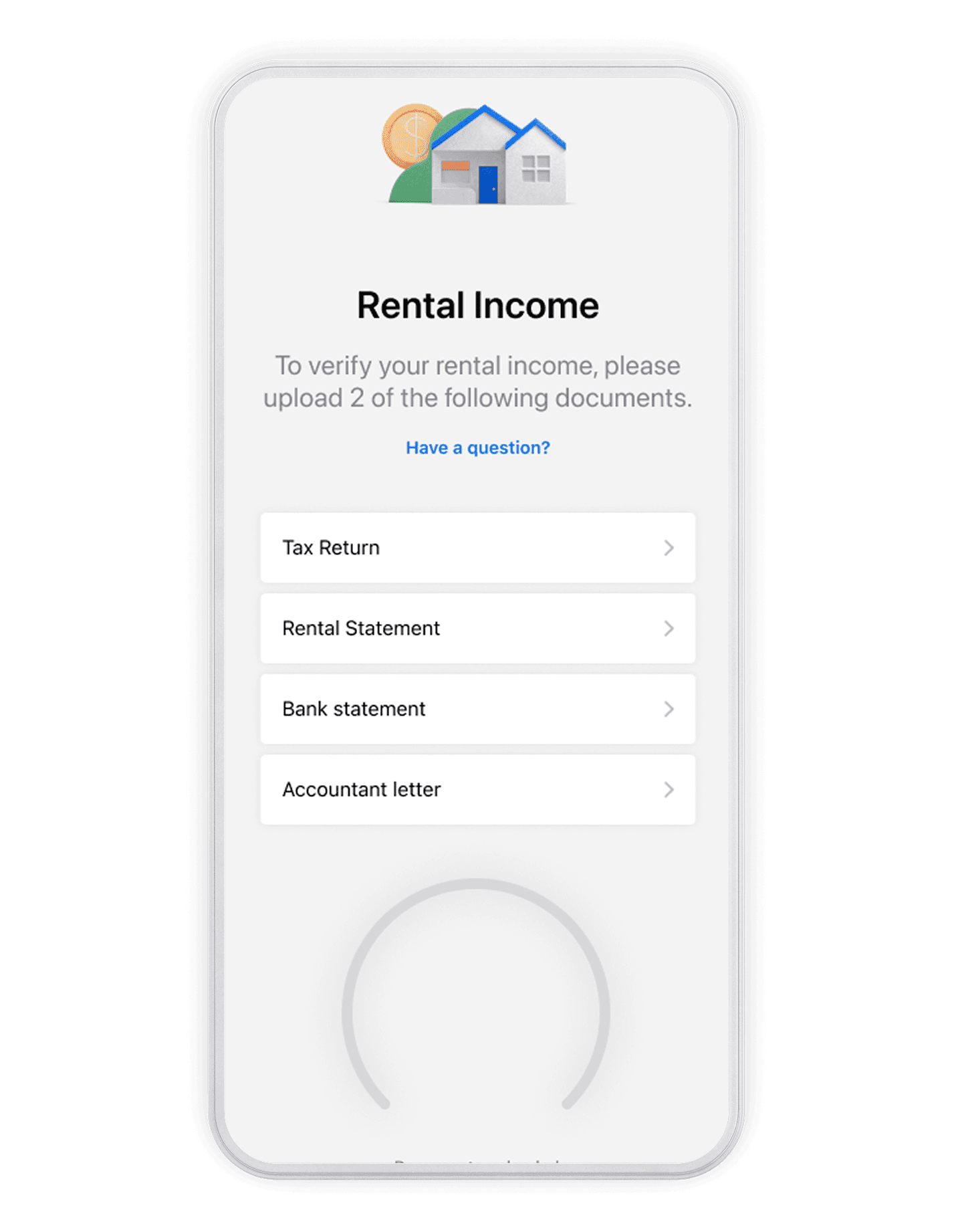
For reuse and scalability – we taught our AI agent to serve information in 3 levels:
Level 1, introduces the process & disclaimers.
Level 2 introduces what information needs verifying with documents, e.g. Rental Income.
Level 3 describes attributes each document would needs to have to be accepted.
For reuse and scalability – we taught our AI agent to serve information in 3 levels:
Level 1, introduces the process & disclaimers.
Level 2 introduces what information needs verifying with documents, e.g. Rental Income.
Level 3 describes attributes each document would needs to have to be accepted.
what it achieved.
what it achieved.
{ impact }
30%
reduction in support tickets.
25%
faster processing times
Significant reduction in customer friction during onboarding.
Significant reduction in customer friction during onboarding.
what others thought.
what others thought.
what others thought.
{ testimonials }
“Jason brought clarity and structure to one of our most operationally complex areas. His ability to balance user empathy with technical constraints made automation feel simple.”
Product Manager, Lending (ANZ Plus)
Product Manager, Lending (ANZ Plus)
keywords.
keywords.
keywords.
{ experience }
Workflow Automation, UX Design, Product Strategy, Process Simplification, Accessibility, Design Systems, Mobile UX, Intelligent UI, Prototyping, Compliance, Collaboration
Workflow Automation, UX Design, Product Strategy, Process Simplification, Accessibility, Design Systems, Mobile UX, Intelligent UI, Prototyping, Compliance, Collaboration



Industry:
Fintech
Client:
ANZ Plus Bank
Year:
2024
Document Automation
{ AI integration }
Reducing manual processing and friction by automating document submission.